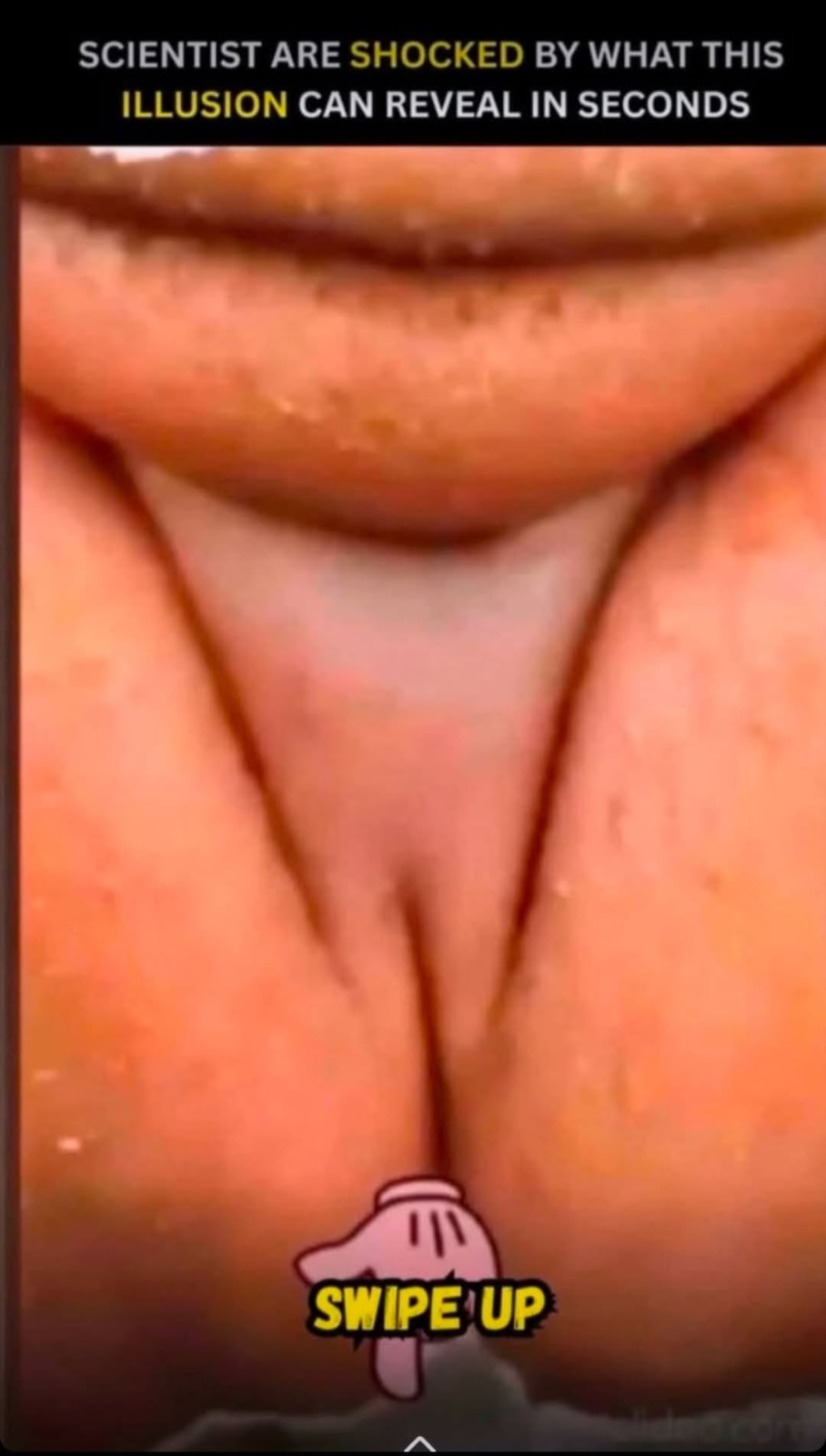
It began like any other viral image — unclear, peculiar, and immediately perplexing. For a brief moment, everyone’s thoughts converged in the same direction. Then came the unexpected twist.
At first sight, it appeared… let’s just say inappropriate for work. Millions halted, gasped, and swiftly zoomed in to verify what they believed they had seen. However, the closer they examined it, the less coherent it became.
Within hours, social media erupted. Reddit discussions exploded, TikToks scrutinized every detail, and individuals debated in the comments: “There’s no way that’s authentic.” “Wait—take another look!”
And that’s when the realization struck them. The photograph was not what it appeared to be at all. It was a flawless illusion — a blend of lighting, texture, and perspective that deceived the entire internet into perceiving something entirely different.

Scientists refer to this occurrence as pareidolia: when the human mind identifies familiar shapes in random objects — such as faces in clouds or figures in shadows. In this instance, it extended far beyond that.
The image was neither inappropriate nor shocking. It was merely a visual deception so potent that it commandeered people’s imaginations before reason could catch up.
By the time the reality was revealed, millions had already shared it, debated it, and succumbed to the same illusion.
So, what do you perceive first? Don’t be too confident — because the next time you suspect your eyes are deceiving you… they just might be.