For Three Years, I Ate Lunch in a Bathroom Stall Because of My Bully – Twenty Years Later, Her Husband Called Me
For years, I hid from my high school bully, until decades later, her family needed me. When the past collided with my present, I faced the truth I’d spent a lifetime running from. Some cycles are meant to be broken, even if it means finally speaking up.
For three years, I ate lunch in a bathroom stall because of my high school bully. Twenty years later, her husband called me to reveal her biggest secret.
People think high school fades, but I remember everything. Most days, I can still taste the sharp tang of bleach in the farthest bathroom stall, hear the echo of laughter from the hallway, and feel the panic when heels clicked past.
Rebecca always wore heels.
The first time she called me “the whale,” I was standing in line for lunch, shifting my tray from hand to hand, wishing I could disappear.
I ate lunch in a bathroom stall.
“Careful, everyone! Maya, the whale, needs extra room!” she shouted.
The cafeteria erupted. Laughter spilled across the tables. Someone banged a tray in approval. And then she dumped spaghetti all over me. The sauce soaked into my jeans.
Everyone stared, but nobody helped.
That was the last time I ate in the cafeteria.
After that, lunch became a covert operation, always the last stall, feet up on the closed toilet lid, sandwich on my knees.
Laughter spilled across the tables.
That was the routine for three years. I didn’t think anyone would understand, so I never told a soul, not even Amanda, the girl from my chemistry class who smiled at me sometimes.
**
My parents died in a car crash when I was 14. The grief didn’t make sense to anyone else, but it made my body do things I couldn’t control. My weight crept up, even though I ate the same as always.
The doctor blamed stress.
“Try and exercise as much as you can, Maya,” she’d said. “It will help regulate all the emotions and hormones running through your body. And if you need more guidance, I’m right here.”
That was the routine for three years.
Rebecca saw me as a target.
She was the queen bee of the school. With her perfect hair, perfect skin, and a voice like a song you can’t escape. She noticed everything that made people different.
Her notes filled my locker:
“No one will ever love you.”
“You’re just… sad.”
“Smile, Maya! Whales are happiest in water!”
Sometimes I think surviving high school was my biggest accomplishment.
“You’re just… sad.”
But even in the trenches, there were bright spots.
Mrs. Greene, my English teacher, would leave books on my desk with sticky notes, “You’d love this one, Maya.”
Mr. Alvarez, the janitor, always made sure the bathrooms were clean right before lunch.
These small kindnesses were my invisible lifelines.
**
I went to college far away. I cut my hair. I got a few tattoos, reminders that I was still young and carefree.
And every day felt like a risk and a reward.
I studied computer science and statistics, numbers made sense, equations didn’t judge. And I started to believe I was more than what Rebecca had reduced me to.
I got a few tattoos.
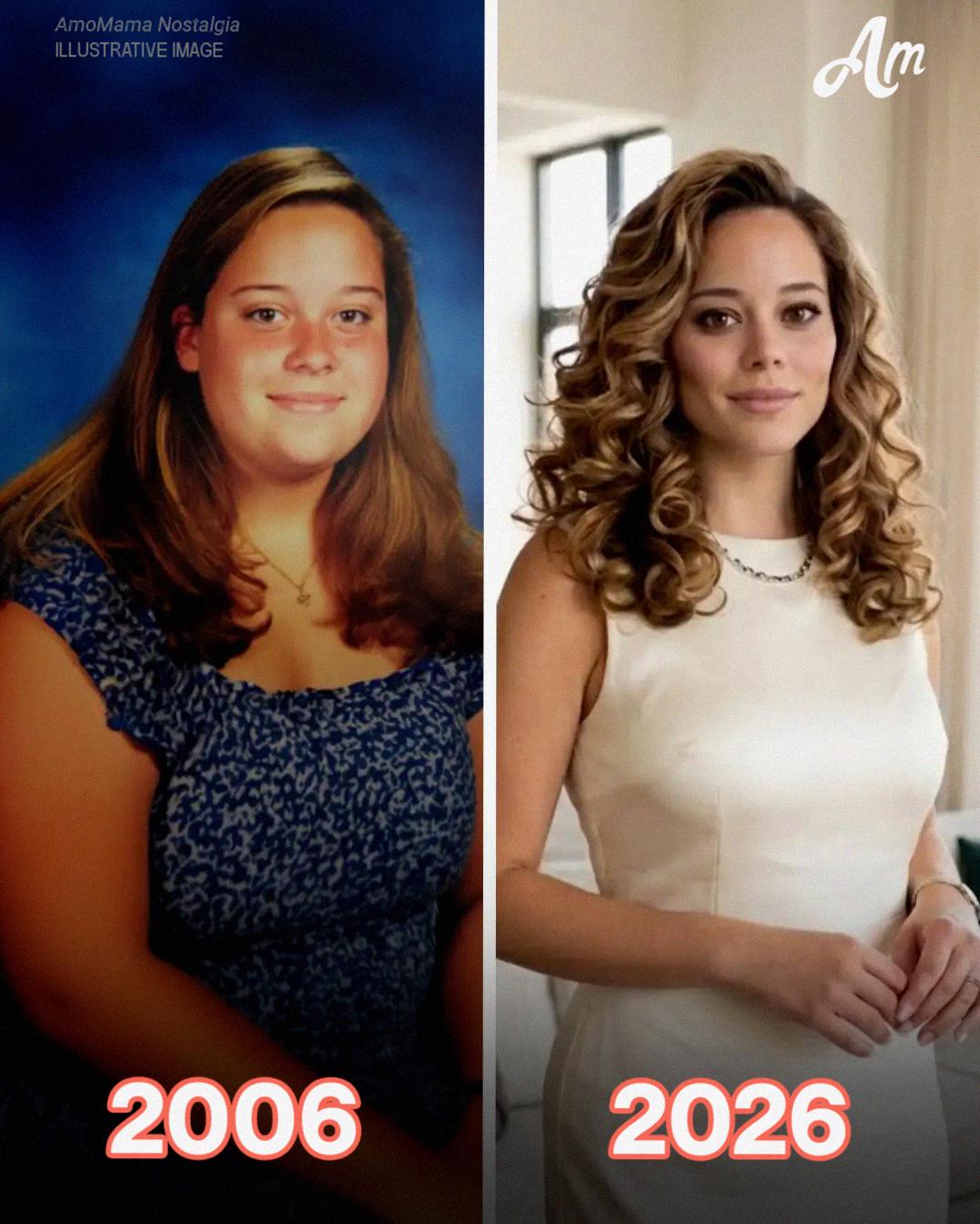
By my final year, I’d lost most of the weight. Not for her, but for me.
I got my master’s, landed a job in data science, and made friends who knew nothing about “bathroom stall Maya.”
For a while, I let myself believe I was a new person.
**
Eventually, Rebecca faded into background noise. She was just an old story that I rarely spoke about, only in therapy. I heard she married Mark, a finance guy that I was sure went to the same school.
I saw her wedding photos on Facebook, big dress, bigger smile, and everything staged. She became a stepmom to a little girl named Natalie.
I was a new person.
Sometimes I wondered if she remembered me at all.
**
Then, last Tuesday, my phone rang.
It was an unknown number that I almost let go to voicemail. But a weird urge had me pick up.
“Hello?”
“Is this Maya?” a man asked.
“Speaking. How can I help you?”
The man sighed in relief.
“Is this Maya?”
“My name’s Mark,” he said. “I’m Rebecca’s husband. I’m sure you remember her from high school…”
It felt like the ground had slipped beneath my feet.
I didn’t answer right away.
Mark’s voice came through the phone. “I’m sorry to call you like this, Maya. I know it’s sudden.”
I pressed the phone tighter. “It’s fine. I just, how did you get my number?”
He hesitated again, then gave a shaky laugh. “I, uh… I found your picture in Rebecca’s old yearbook. I guess I was searching for answers. I found your LinkedIn through your full name. Your company had a phone number listed.”
“I know it’s sudden.”
I pictured him flipping through dusty pages, scanning old faces. It made my stomach twist.
He continued, “I hope that’s not weird. I just… needed to talk to you.”
“Why are you calling me, Mark?”
He drew a ragged breath. “I know this is strange, calling you after all this time, Maya. But I didn’t know where else to turn.”
I gripped the edge of my counter, pulse racing. “What’s going on?”
“I know this is strange.”
“It’s Natalie, my daughter. She’s been… different lately. She’s been quiet and constantly eating alone. I found food wrappers and dirty plates hidden in her bathroom. She told me she prefers it that way, but I see how tense she gets when Rebecca’s home. I just, something felt off.”
I listened in silence.
“I confronted Rebecca about it,” he continued. “She just brushed me off. She said Natalie’s sensitive, and that she’ll grow out of it. But the way she talks to my daughter, Maya, she always digs at her weight, her clothes, her grades. I just couldn’t shake it.”
I could picture it already, the cold scrutiny, the underhanded comments.
“I confronted Rebecca.”
He hesitated, then his voice dropped. “A few nights ago, I started looking for answers. I went through some of Rebecca’s old things, hoping to find something that might help me understand her. I found a stack of diaries from high school, tucked in the back of her closet.”
I held my breath, waiting.
“There were pages about you, Maya. Not memories, plans. She wrote, ‘If I keep them staring at her stomach, they won’t look at her grades.’ Then she started scoring it, like a game. ‘Day 12: bathroom again. Good. Keep pushing.’ And one line, I can’t unsee it, ‘She’s smarter than me. If they notice that, I’m done.'”
Mark swallowed. “I found the same thing happening to Natalie. The wrappers in her bathroom, it wasn’t a phase. It was her goal.”
I held my breath.
The truth landed heavy.
“Mark, I’m so sorry for your daughter.”
He sounded broken. “No one deserves that. Not you, not Natalie. That’s why I’m calling. I want to help my daughter. But I think, I think she needs to hear from someone who’s lived it.”
“Are you asking if I’ll talk to her?”
“If you’re willing, Maya,” he said. “I haven’t told her about you yet. I wanted to ask your permission first. Maybe if she hears your story, she’ll feel less alone. I’ll leave it up to her to reach out.”
“No one deserves that.”
I nodded, even though he couldn’t see me. “Yes. Tell her about me. I’m here whenever she’s ready.”
Mark let out a long, relieved breath. “Thank you. That means everything to me. I’m meeting with a counselor next week. I’m filing for separation. Natalie’s well-being comes first.”
He paused, voice steadier. “And Maya, I’m sorry for what you went through. I really am.”
I managed a small smile. “Thank you for calling, Mark.”
**
That night, I opened my laptop, still wired from Mark’s call. I searched my inbox for that old interview, “How I Survived High School Bullying and Built a Career in Tech.”
“Thank you for calling.”
The thumbnail made me cringe a little; my hands were twisted in my lap, but my smile was real.
I clicked play and watched myself talk about those bathroom stall lunches.
“I felt invisible most days. The best part of coding was that it didn’t care if you were popular, just if you solved the problem.”
I remembered saying that. I remembered how alone I’d felt, and how hard it was to admit.
My phone buzzed, a new message notification.
From: Natalie K.
Subject: “Women in STEM question?”
“I felt invisible most days.”
My heart sped up as I clicked.
“Hi Maya,
I hope it’s okay I’m writing. I watched your interview online. You said you used to eat lunch in the bathroom. I do that too sometimes.
My dad told me all about you. I know you know my stepmother. She says things about my weight, my clothes, or that my ‘robotics obsession’ is a waste of time.
Last week, at dinner, she told my dad that girls like me don’t really fit in engineering. She says I’m too sensitive, that I’ll never make it in college STEM.
“I watched your interview online.”
I’m applying to a few next year. Sometimes I wonder if I should even bother.
Sometimes I eat all my meals in the bathroom, because it’s the only place she’ll leave me alone. Did you ever feel like you were the only one like this?
Sorry if that’s weird. I just… wanted to know.
Natalie.”
My hands shook a little.
I wrote back.
“I just… wanted to know.”
“Hi Natalie,
Thank you for reaching out. I know exactly how you feel, probably more than you realize. When I was younger, hiding felt like my only option.
But coding and data sciences gave me something Rebecca couldn’t touch: proof that I belonged.
If you ever want to talk about robotics, college apps, or just need to vent, I’d love to hear what you’re working on. You belong in STEM, never doubt that.
—M.”
“I know exactly how you feel.”
We messaged back and forth for a while, and just like that, the bathroom stall didn’t feel quite so lonely anymore.
**
The next day, I called Mark.
“Natalie wrote to me.”
His relief was plain.
“Thank you. The counselor said it’s good for her to have another adult who understands.”
**
The next week, I found myself standing on Mark’s front porch, hands clammy, heart thumping. He’d invited me for coffee and “a conversation,” but when the door swung open, Rebecca was there.
His relief was plain.
“Maya,” she said. “So nice to finally catch up, after all these years.” She swept her hand in. “Come in. Mark and Natalie are in the kitchen. I told Mark we do this at home, family business stays in the family. We’re waiting on the counselor. I don’t know why we’re wasting our time.”
I stepped inside.
Natalie was sitting at the island, scrolling her phone, shoulders tense. Mark hovered by the coffeepot, pouring cups with shaking hands.
The counselor arrived, a calm woman named Dr. Ellis. She greeted us all, then said, “Let’s have an honest talk. I know things have been hard.”
“We’re wasting our time.”
Rebecca jumped right in.
“Honestly, I think there’s been a misunderstanding. Maya and I went to school together. Things weren’t perfect back then, but we’ve all grown, haven’t we?”
She shot me a look that was half-plea, half-challenge.
I held her gaze.
“Rebecca, you didn’t just make my life hard. You made a pattern, and patterns don’t lie. Your diaries spelled it out. And now you’re doing it to your stepdaughter…”
She shot me a look.
Mark’s eyes flicked to Rebecca. “She’s right. I read every word.”
Rebecca bristled, voice icy. “That was 20 years ago. We were kids.”
Natalie set her phone down. “You still do it, Rebecca. Every time I talk about college, you roll your eyes. You say I’m not cut out for STEM. I don’t even want to eat at home anymore.”
Dr. Ellis nodded, calm but firm. “Rebecca, this pattern is emotional abuse. It damages confidence, eating, identity, and it doesn’t disappear because you call it ‘help.'”
Rebecca’s jaw clenched. “I only want what’s best for this family.”
“That was 20 years ago.”
Natalie’s voice shook. “You don’t want what’s best for me. You want me smaller so you feel bigger.”
The room fell silent. Rebecca looked between us, her composure finally slipping.
Mark cleared his throat. “I’m moving forward with the separation. Natalie needs to see that respect means action.”
“Mark, don’t be irrational!” Rebecca shouted.
Natalie’s eyes found mine. “Thank you for showing up.”
“I promised I would,” I said, squeezing her hand.
The room fell silent.
**
A week later, Natalie showed up at my office, wide-eyed. I introduced her to my team, women coding, leading, fixing bugs over coffee.
She grinned, letting her guard down. “This is what I want. A place where I belong.”
“You already do,” I told her.
We ate lunch together in the break room — door open, no shame, just sunlight and possibility.
Some cycles break quietly. Sometimes, all it takes is one open door — one truth, one voice, and a little sunlight.
“A place where I belong.”